For junior illustration major Laysha Adame, commuting to class this semester felt like a calculated risk. After seeing videos and hearing reports of Immigration and Customs Enforcement activity in her neighborhood, she said even leaving home required heightened caution.
Adame’s experience reflects a broader pattern among Columbia’s commuter students, many of whom said reports of ICE activity across Chicago reshaped how they traveled to campus this semester.
“I have seen videos of my direct neighborhood, right in front of my grocery store, of a man being chased down by ICE,” she said. “My family have seen ICE. My brother was near a Dunkin Donuts and saw somebody get detained, so they are in my area.”
All semester long, commuter students at the college have faced an unusual and unsettling barrier to attend class: the pervasive presence of ICE agents across the greater Chicago area after the federal government launched “Operation Midway Blitz”, the Department of Homeland Security-led enforcement surge. For many, routine travel became shaped by fear, uncertainty and a constant sense of being watched.
ICE does not publicly disclose the timing or locations of its operations, but commuter students said reports of ICE activity near CTA stations, neighborhood sightings and widely shared videos altered how they navigated the city this semester. Several students said the fear affected their ability to attend class consistently, concentrate on coursework and participate in campus life, prompting some faculty members to offer flexibility around attendance and deadlines.
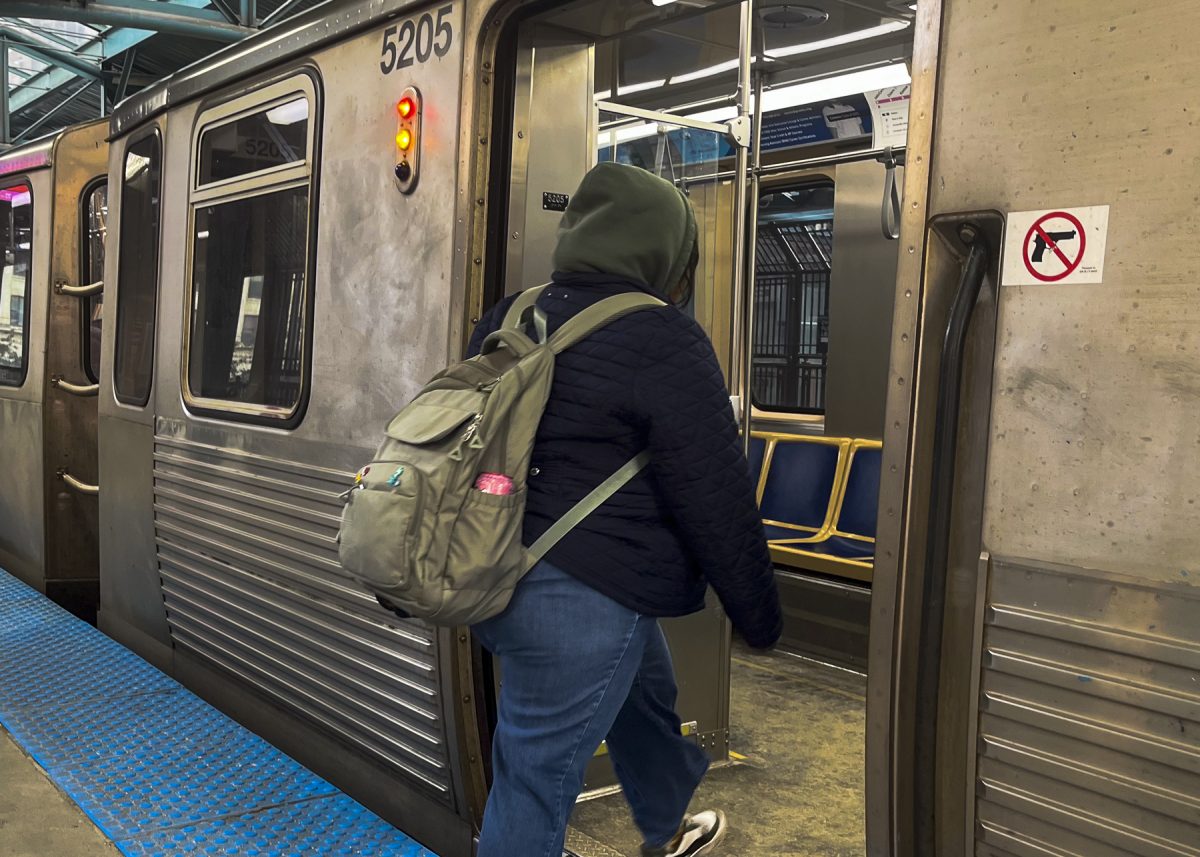
Adame said the sightings have transformed how she chooses to move throughout the city and described checking online on websites such as “ICE-Watch” before leaving home, turning what used to be an ordinary train ride into a daily routine of hypervigilance.
“When I’m commuting I’m always weary,” she said. “I’m not blasting music in my headphones, I’m looking around my shoulder, always have my ID and my phone out in case anything bad happens.”
For students living near the Broadview detention facility in suburban Chicago, a focal point of immigration operations in Cook County, the fear was even more immediate. Mehida Toledo, a senior graphic design major who completed her final semester this fall, lives just minutes away from Broadview.
“With all the raids going on, I cannot go to my usual stations,” Toledo said. “The only times that I do go out is to just take the train and the bus. I dont drive anywhere, I dont go see my friends, I don’t go to the mall and it’s the worst thing ever because I’m just cooped up at home either cleaning or doing homework.”
Toledo said some of her professors addressed the situation directly.
“They were saying, ‘We know the situation with ICE. If you ever feel unsafe you don’t have to come into class,’” she said. “It was when it was first reported that ICE was by the CTA stations.”
Faculty also saw the effects of presence in their classrooms, mainly in the increasingly empty seats throughout the semester.
“We have talked to faculty who said some of their students do not feel comfortable traveling to campus,” said Gabriela Diaz De Sabates, an associate professor in the School of Communication and Culture. “Most, if not all of them, wanted to do something about it, how to keep their careers, their classes, going without jeopardizing their safety.”
Diaz De Sabates said despite the looming threat, what stood out this semester was the solidarity among faculty and students.
“It brings you together, it makes you stand for each other,” she said. “What I think is very moving and important is to see who your allies are—looking around to the people that support you. Chicago is there to support our communities and make sure that they are affected as little as possible by these tremendous negative impacts.”
The school administration echoed this sentiment of support. Senior Associate Provost Nathan Bakkum said faculty were asked to remain flexible and compassionate with absences linked to ICE activity.
“Our guidance to faculty has been consistent throughout the term,” Bakkum said in an email to the Chronicle. “We know students face a range of pressures and challenges that can make it difficult for them to fully participate in class each week, and those pressures have been exacerbated by recent activity in the Chicago area.”
He said academic leaders have continued to emphasize “kindness, understanding, flexibility and support to ensure that every student has the best chance to succeed.”
Although the government has framed ICE operations around immigration enforcement, students said the presence of agents and reports of stops based on appearance left many feeling vulnerable regardless of their status.
Janet, a sophomore film and television major who did not want to include their full name for fear of their safety, said their citizenship offered little reassurance.
“There are times when I’m scared even though I am a citizen,” they said. “It’s a clear sense of racial profiling. Whenever there was ICE around, especially during school events, I would try hiding in buildings or go away from them.”
This has sent ripple effects into their class life, affecting their academic progress as well as their mental health “due to immense paranoia” out of the safety for themselves and their parents.
“My father had two coworkers be detained by ICE and in my family that has severely scared them to being more cautious and also not being in classes,” they said.
Even students without undocumented family members felt the surrounding pressure. Mateo Suarez, a sophomore business and communications major, said he has completely stopped using public transit and opted to either using Ubers or catching rides from other people.
“Even though I’m a citizen, seeing how many people were being taken, and were citizens, was too much of a risk for me,” he said.
Suarez noted that several of his friends have had family members detained.
“It creates a huge feeling of fear,” he said. “Because if you get taken, it is not going to be good at all.”
Copy edited by Matt Brady
Additional reporting done by Aaron Guzman and Vivian Richey