Senior graphic design major Henry Stultz didn’t expect the past year of national politics to change how he thought about his future, but the pace of executive orders and the visible expansion of federal law enforcement have pushed him to think more critically about where the country is headed.
He said the current political climate under President Donald Trump has made him reflect not only on leadership, but on how federal decisions ripple into everyday life.
Stultz first became politically active during the Black Lives Matter protests in 2020. While his in-person involvement has since declined due to time constraints, he said the events of the past year have kept politics firmly on his mind.
“I feel like there is definitely some relevance with the choices being made in our country’s leadership, kind of dwindling the job market and just roughing up the economy really badly,” Stultz said. “It kind of feels like we should be talking a bit more about how that affects everybody.”
Stultz’s experience reflects a broader shift among Columbia students navigating a changed political landscape.
A year after Trump’s inauguration, many students say their initial disbelief following the November 2024 election has given way to a mix of cynicism and renewed political engagement, as they confront the administration’s policies on immigration enforcement, the rollback of diversity, equity and inclusion initiatives in education, and challenges to LGBTQ+ rights.
“I feel like almost everyone I talk to, there’s at least one thing that has impacted them or has affected them because of the election and actions either leading to or after the inauguration,” said Milagros Sanchez, a first-year fashion studies major.
As of Fall 2024, 55% of Columbia’s student body identified as Black, Indigenous or people of color, and 39% identified as LGBTQ+ at the time of entry — two groups that have been highly impacted by Trump’s recent executive orders.
Daniel Williams, a part-time instructor in the School of Communication and Culture who teaches political science, said he has noticed that students are feeling more “worry and anger” than they did last year, outlining a shift in political engagement.
Though he said the shift remains limited at Columbia, Williams has observed students moving from ideological polarization and disagreements over policy to affective polarization, in which political conflict becomes more personal and adversarial.
“You have students arriving with identities of ‘I’m liberal,’ ‘I’m radical,’ ‘I’m an anarchist,’ ‘I’m conservative,’” Williams said. “They’re often more focused on defending that position from attack than engaging with difficult ideas.”
“You have students arriving with pre-set identities of, ‘I’m liberal, I’m radical, I’m an anarchist, I’m conservative,’ and are often seeking to defend that position from attack rather than engage in difficult ideas,” Williams said.
Faculty and student organizers say that dynamic has shaped how political engagement happens on campus, prompting efforts that emphasize participation and dialogue over partisan identity.
One of those efforts is Columbia Votes, a student initiative launched in 2019 to help students learn about voting, register to vote and find ways to engage civically. The student group is administered by Columbia’s Civil Engagement Fellowship, led by Melissa Gamble, an assistant professor in the School of Fashion.
The group’s student voter registration geniuses have visited 17 classes this semester, including the CCCX classes, to encourage students to get civically engaged in new ways, such as volunteering for causes they care about.
Events are being held to engage students with the upcoming primary and 2026 midterm elections.
Columbia Votes will continue visiting classrooms in the spring semester and is looking for more Voter Registration Geniuses to motivate other students to take action.
“You don’t have to be a voter registration genius to be civically engaged and encourage others to act too,” Gamble said.
For student volunteers, that message resonates with what they are seeing firsthand.
Teddi Karnes, a senior film and television major who is a voter registration genius, said they have observed students feeling “beaten down” by the political landscape since the 2024 presidential election.
Karnes said those conversations about civic engagement increasingly come with underlying tension, as the national political climate influences how students interpret the group’s mission.
Karnes, who has been a Voter Registration Genius since their first year, said they encourage students to engage in multiple ways, from volunteering with local organizations such as Chicago Cares to supporting campus resources like The Rack, Columbia Cares and the food pantry.
But they said maintaining the group’s bipartisan approach has become more difficult amid heightened political polarization.
“Right now, our pro-democracy stance is kind of outweighing that,” Karnes said. “We can’t ignore the fact that our peers’ rights are being taken away.”
Oshun Cortez, a sophomore film and television major who is also the Latino Alliance representative to the Student Organization Council, said that his engagement with politics has changed, not “in terms of better or for worse,” but in ways he can help others.
Through Latino Alliance, Cortez, along with the other members, has been staying politically active through sharing resources for those who need it.
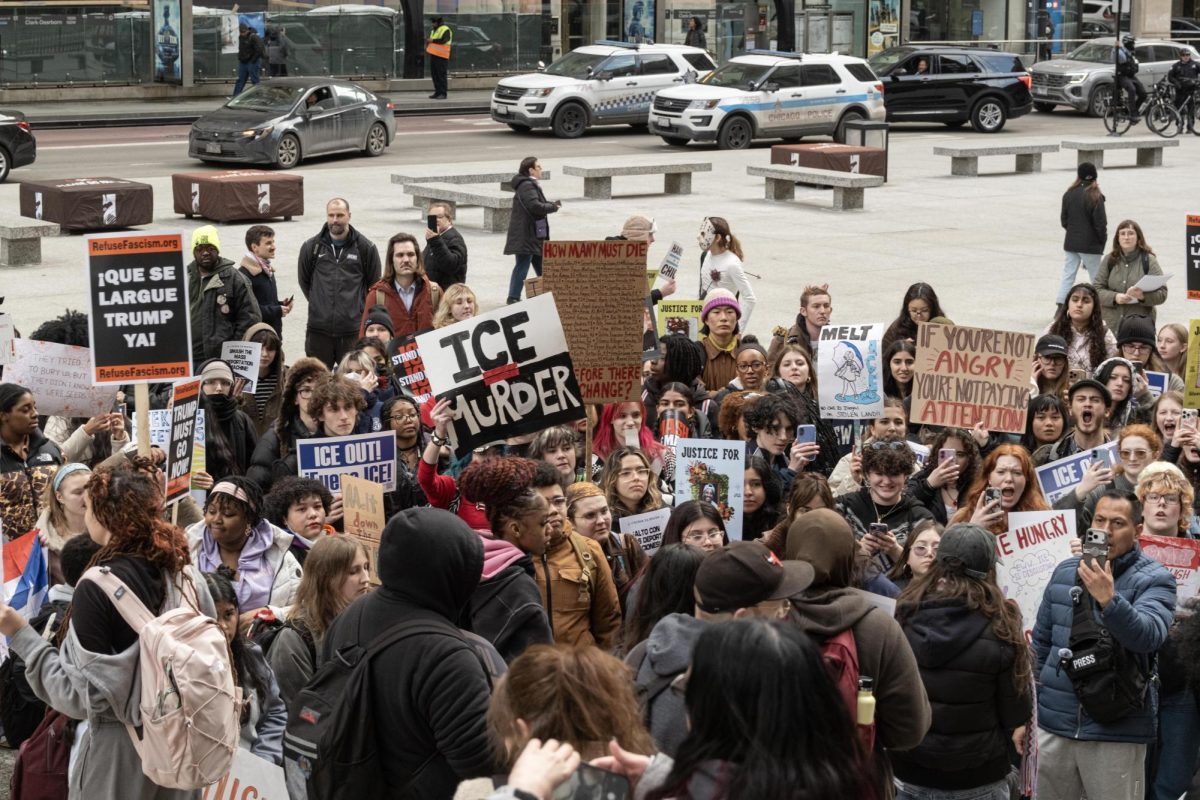
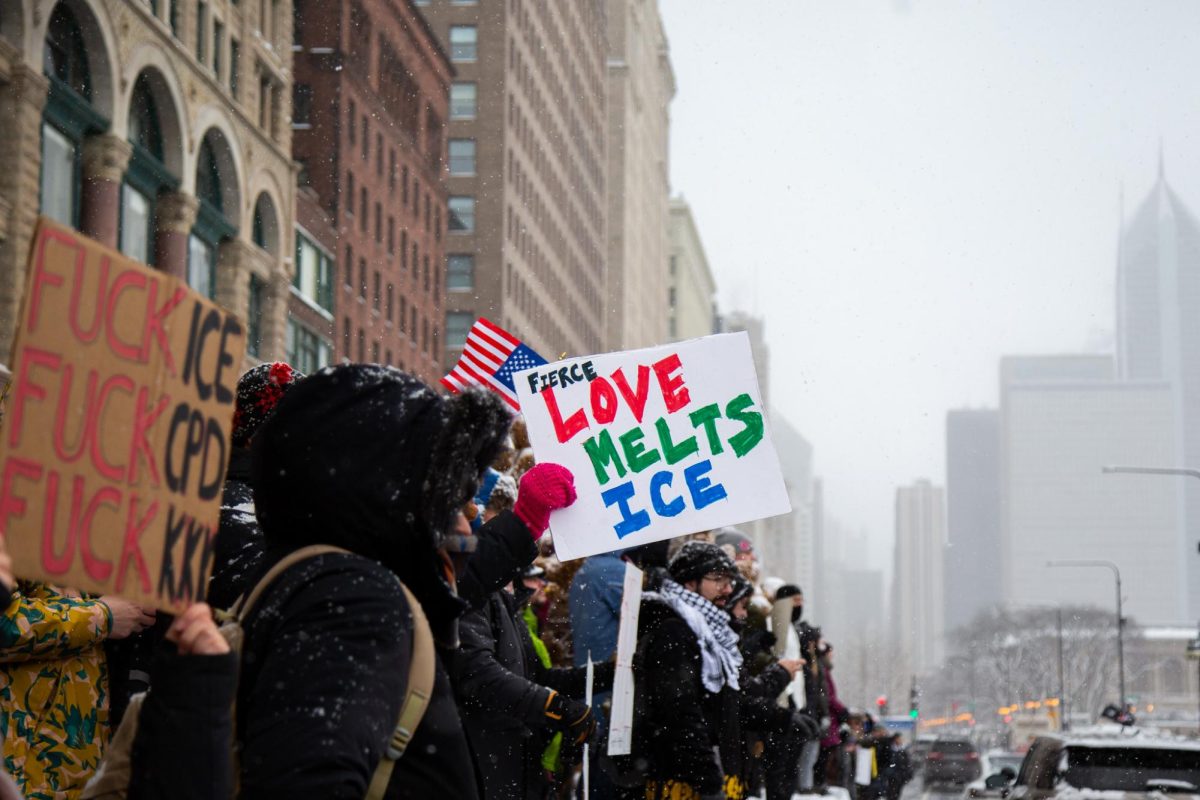
Some students have been following politics through social media as their main political digest, which has been flooded with pictures and videos of the U.S. Immigration and Customs Enforcement agents on the streets of Chicago as part of Trump’s “Operation Midway Blitz.”
Because of social media, Cortez feels like he’s been more aware of non-profits and organizations that are actively working to inform the public about the current political landscape.
“I feel like it’s a bit more safer,” Cortez said. “Just the fact that people are now being vocal about these issues.”
Faculty members say those shifts are playing out unevenly in the classroom.
Marcelo Sabatés, a professor in the School of Communication and Culture, said that he has noticed both an increase and a decrease in the number of his students’ engagement with politics.
He said engagement has increased among a wide range of students, including Black, Latino and LGBTQ+ communities. But he attributed declining participation overall to students’ fear and disappointment in the political process.
Sabatés, who teaches “Hispanics in U.S. Since 1800,” which has many Latino students, has observed that Latino students have become much more politically engaged and more aware of their rights, not just for themselves but also for the betterment of their families.
“Sometimes there is fear of going out of your home, or sometimes you are the only one in your family that is not fearful of going out of your house,” Sabatés said. “I don’t think it’s only a Latine experience, but in this particular time in Chicago, that’s very salient.”
For some students, that fear has translated into heightened awareness and action.
Alex Gonzalez, a senior film and television major, said that he has been engaged with politics “to the max” by checking the news every day and independently doing his own research.
Gonzalez, who is Latino, stays involved through local efforts such as volunteering at his library, handing out ICE whistles at his church and attending the past No Kings protest. He said social media has been his main way to engage — by both sharing information and keeping up with what others post.
Gonzalez said he feels like “everyone’s underreacting” about what is happening and urged others to become more politically active.
“My family members are affected by this. I have family members that are staying indoors,” he said. “We need to be doing way more.”
Students are continuing to learn what they can do to be civically involved in the new political landscape, and they are not backing down.
“Students definitely still have the urge to fight,” Gamble said. “The incidents with ICE, attacks on the LGTBQ+ community, erasure of histories and achievements by people of color and women and other challenges that have increased this year have motivated students to re-engage.”
Copy edited by Emma Jolly