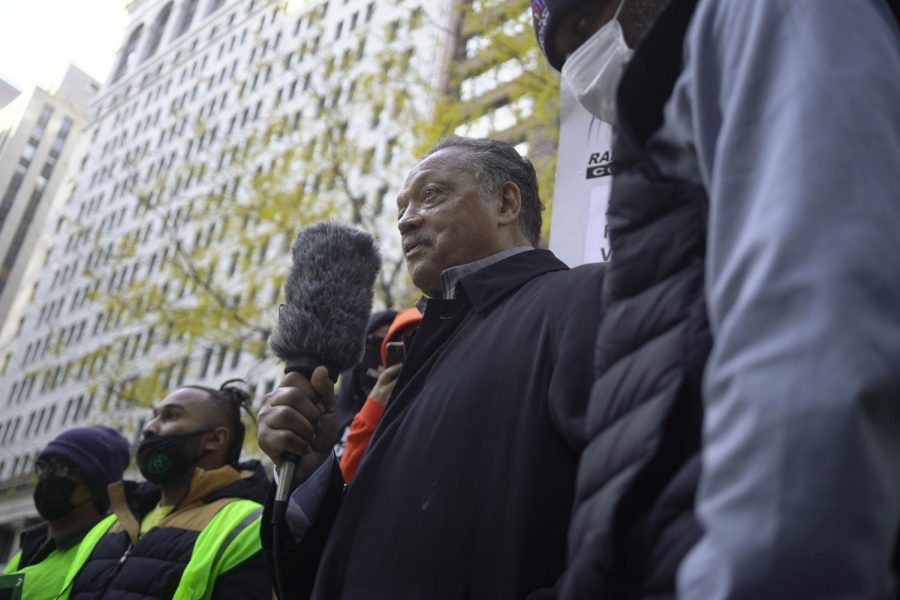
As Chicago leaders lowered flags across the city this week, Columbia students reflected on the legacy of The Reverend Jesse Jackson, whose decades of activism shaped the political and cultural landscape of the city many of them now call home.
Jackson, who died Tuesday, Feb. 17 at 84, was one of the nation’s most prominent civil rights leaders and a two-time Democratic presidential candidate whose 1984 and 1988 campaigns expanded Black voter participation and reshaped national politics. Jackson found the Rainbow/PUSH Coalition in Chicago, using the city as a base for organizing around economic justice, voting rights and educational equity.
John H. White, a part-time instructor and Pulitzer Prize winner who has taught photojournalism at Columbia for decades, said he was deeply impacted by Jackson.
“He was a man of light,” White said. Having known him since 1969, White reflected on their relationship, saying his family even refers to him as “uncle John.”
When describing their relationship he said, “Sometimes there’s a friend that’s closer than a brother.”
“His mother called me her other son,” he said. “I was a part of the family.”
Steve Liss, a former part-time faculty member and coordinator of the photojournalism program, covered Jackson’s presidential campaigns between 1984 and 1988. He said hearing Jackson speak was “like a breath of fresh air” compared to other political figures he had covered.
“He was a spellbinder, my good lord,” Liss said. “He spoke in the cadence of not only a preacher, but of an experienced persuasive politician.”
Liss recalled watching Jackson address audiences that were not always immediately receptive, including predominantly white crowds in rural communities.
“I think this was just very different than what they’d seen and what they’d heard,” he said.
Liss said Jackson shared a unifying philosophy similar to that of Martin Luther King Jr., one rooted in the belief that Americans could ultimately find common ground.
“I think he believed that in the final analysis we would come together,” Liss said.
Student Sierra Miller, a senior photography major, said she most memorably associates Jackson with his poem, “I Am Somebody.”
“It’s powerful, and I think it resonates with a lot of people today,” Miller said. “He helped a lot of Black and Brown people realize that they can accomplish different things and put things in effect to help those people achieve different things.”
First delivered during Jackson’s work with Operation PUSH in the 1970s, “I Am Somebody” became one of his most recognizable refrains. The call-and-response poem, often recited with schoolchildren and community groups, affirmed dignity and self-worth at a time when many Black Americans were fighting for equal access to education and opportunity. The phrase became a mantra of the civil rights movement and a staple of Jackson’s speeches, reinforcing his message of empowerment and collective strength.
In a social media post the day Jackson died, former Chicago Tribune columnist Mary Schmich recalled first seeing Jackson speak in a small Mississippi town in the late 1980s while covering the South for the newspaper. Inside a packed school gymnasium, Jackson led young people in a call-and-response that would become one of his most enduring refrains.
“He urged them to repeat after him: ‘I AM SOMEBODY,’” Schmich wrote. “Call and response, over and over.”
Schmich described the electricity in the room, filled mostly with young Black Southerners, as one of the most powerful moments she had witnessed.
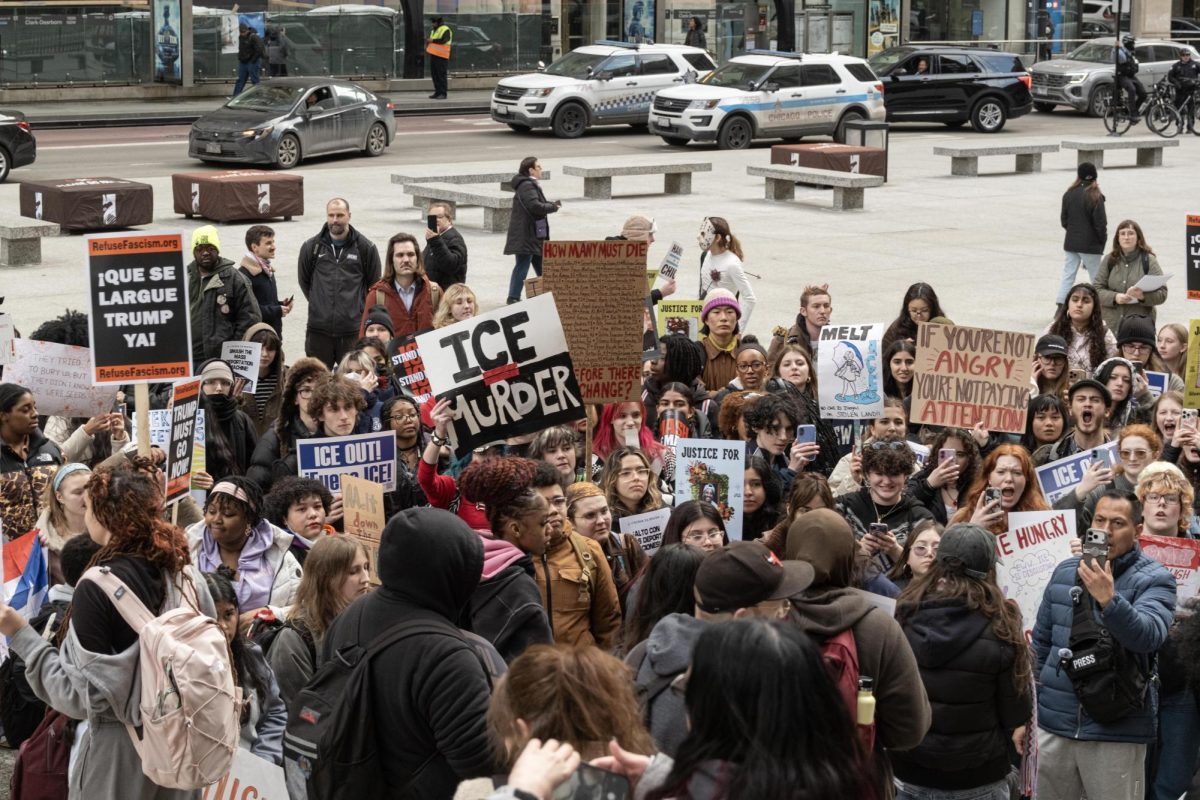
She saw Jackson again just months ago at a rally in downtown Chicago, riding in a wheelchair toward a crowd of demonstrators.
“Jesse Jackson, a man of great ambition and vision and flaws and achievement, still out and about, riding toward the protesting crowd, right up until the end,” Schmich wrote.
CM Burroughs, an associate professor of poetry in the School of Communication and Culture, told the Chronicle that Jackson stood alongside other civil rights leaders in shaping her understanding of justice and activism.
“Jesse Jackson was a civil rights hero in my mind, right there alongside Dr. Martin Luther King Jr. and Hosea Williams,” Burroughs said in an email.
She is originally from Atlanta and “Dr. King’s museum and home were frequent visits during my childhood, ” Burroughs said. “As long as I can remember them and the noted and unknown freedom fighters who stood beside them, then and now, I believe Black people have a fighting chance in this country.”
For Miller, who is originally from Chicago, Jackson’s legacy is defined by his impact on younger audiences, particularly children and young people, encouraging them to pursue who they wanted to be despite the circumstances they were facing.
Miller said influential leaders from Chicago like Jackson “definitely leave a mark” on the city.
“Chicagoans, they go hard for their city,” Miller said.
John White said that Jackson’s ideals will continue to impact people because his family will continue his legacy, and his vision will live through them.
Jackson is survived by his wife, Jacqueline Jackson, and his children, including U.S. Rep. Jonathan Jackson of Illinois and former Chicago Ald. Santita Jackson. Several members of his family have continued his work in politics, ministry and advocacy through the Rainbow/PUSH Coalition and other civic organizations.
“It’s a team you know,” he said. “You can’t kill a dream.”
Copy Edited by Samantha Mosquera