
A proposal before the Faculty Senate could change how the college defines a passing grade in major and minor coursework, potentially allowing a C-minus to count toward program requirements for the first time.
If approved, the policy would also allow transfer students to apply courses earned with a C-minus toward their majors or minors, rather than having those credits count only as electives.
Under current policy, students must earn a C or higher in required major or minor courses. Grades below that threshold, including a C-minus — which carries 1.7 points toward GPA — do not meet the college’s 2.0 academic average requirement and therefore cannot be applied toward program completion.
Most colleges and universities follow a national standard that allows any grade above a D or F to count toward program requirements. Many institutions also track DFW rates, which measure the number of students who earn a D or F or withdraw from a course.
At Columbia, however, a C-minus is treated the same as a D in major and minor coursework, meaning it does not count toward program requirements.
Discussions about changing the college’s academic compliance standards have been ongoing in the Faculty Senate since approximately 2019, but were put on hold for more pressing matters.
According to Greg Foster-Rice, associate provost for student success initiatives, 153 grades of C-minus were given out in major classes during the Fall 2024 semester, which is less than 1% of the 19,125 individual grades awarded in major courses that term.
“It’s a relatively small problem,” he said, “but with potentially big impacts on the small-ish number of students affected.”
Evan Ellison, a junior radio major, was under the impression that getting any level of a C grade meant passing until he earned a C-minus in a major class during the Spring 2025 semester, which he attributed to not being able to purchase the required book because of the cost.
Ellison now has to retake the class before being able to graduate next academic year.
“I tried to do it this semester,” Ellison said. “The seats filled up too quickly and stuff. So now I gotta take another semester.”
Ellison said that changing the policy would be a step in the right direction to support students who are trying their best to do well in school but have other things going on in their lives as well.
“There’s so much other stuff that I’m trying to do. Sometimes my priorities are elsewhere, except for school,” Ellison said. “C is a passing grade no matter which way you think about it.”
Foster-Rice said students earning a C-minus are having to repeat courses for fractional point differences, a grade of 72 vs. 73, or 0.3 grade points, “which is expensive and effectively acts as a retention barrier.”
Research from ScienceDirect indicates that having to repeat a course can cause significant negative effects on student retention, even increasing first-year dropout rates by approximately 10%. Though some people believe that course repetition can lead to improved academic success, the study found that performance only went up by about 0.5 grade points.
Now, with Columbia’s enrollment, retention and student success hanging in the balance, the topic of changing this policy has resurfaced, as it would not only clarify confusion about standards but also enable more students to earn credit.
Cecilia Beaven, a part-time instructor in the School of Visual Arts, said that she avoids giving students a C-minus grade even offering make-up work as a chance to increase their academic standing.
Beaven said that changing the policy “sounds more straightforward” but may not encourage students to keep their GPAs up for any future endeavors like grad school.
“I think it will help with retention, for sure, and not discourage students,” Beaven said, “but I also feel like faculty have to give more opportunities to students to perform better in the first place.”
Sophomore musical theatre major Danielle Lang said that her professors have done their best to make sure students know about the C-minus grade policy so that no one is caught off guard at the end of the semester.
Lang said that changing the rule would be “easier for students” to understand, but that teachers may not give as much grace with missing assignments or attendance.
“I think faculty will just be less lenient with it now, because they’re like, ‘you can still pass, you’re fine and you didn’t put in the extra work,’” she said.
Though Lang said she believes this would help graduation rates, she is also concerned about the quality and effort that students may put in if standards are lowered.
“I think students might take classes less seriously,” she said. “If people are just trying to graduate and get the degree, they will just put in less work.”
Senior film and television major Arber Memedi didn’t know about the C-minus grade policy, but said that it may be hard for students to understand the specific cutoff.
“Usually, whenever I see grades, it’s just an A or B, never plus or minus,” said Memedi. “I think that could confuse anyone trying to pass class. They might have tried to increase their grades as a result of it.”
Shamel Flores, a sophomore transfer student majoring in music production, said she doesn’t feel like a C-minus is “that low of a grade.”
“Specifically, like a liberal arts school, I think some people learn things differently,” Flores said. “I feel like there are a lot of things that need to be taken into consideration before you go, ‘This doesn’t count as a credit at all.’”
Foster-Rice said that accepting anything in the C range is the “best and simplest solution.”
“Anything we can do to reduce student confusion and anxiety helps with student success,” he said. “Anything we do to ease the transition of transfer students to Columbia helps with student success.”
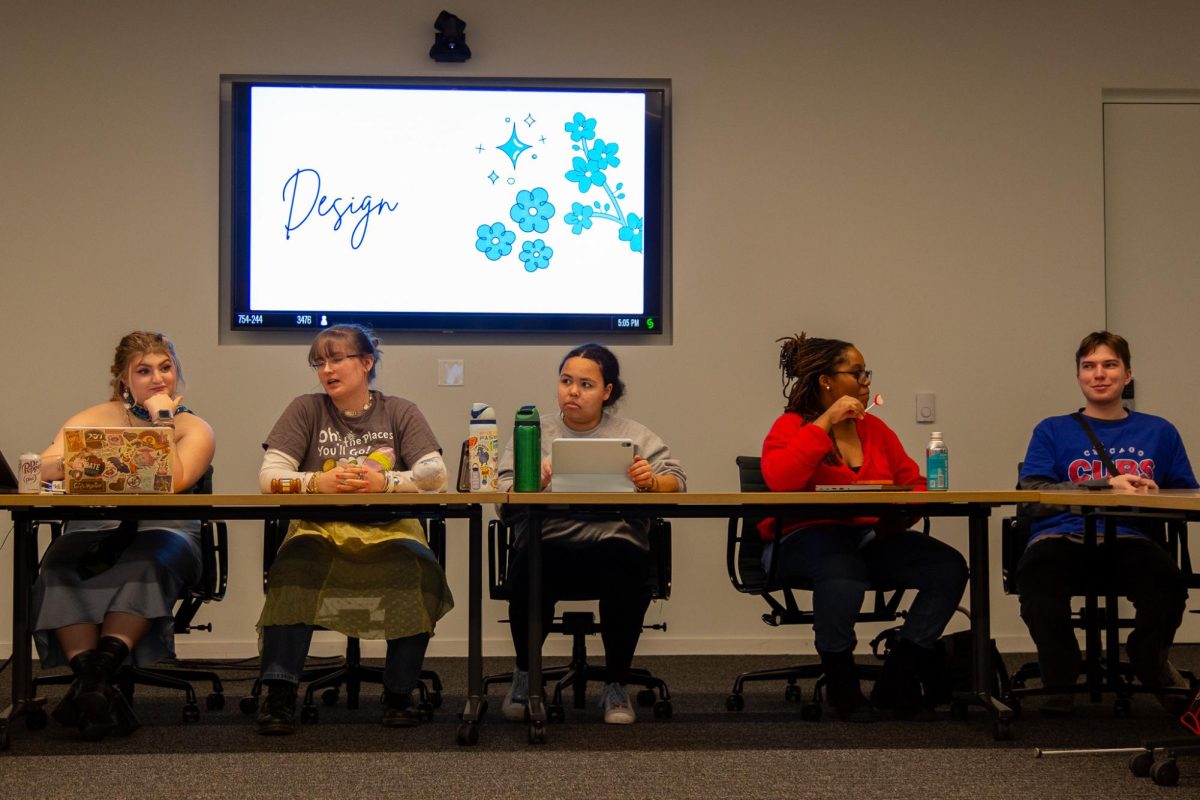
The Faculty Senate is expected to consider a formal proposal to change the grading standard at its first meeting in January.
Copy edited by Brandon Anaya