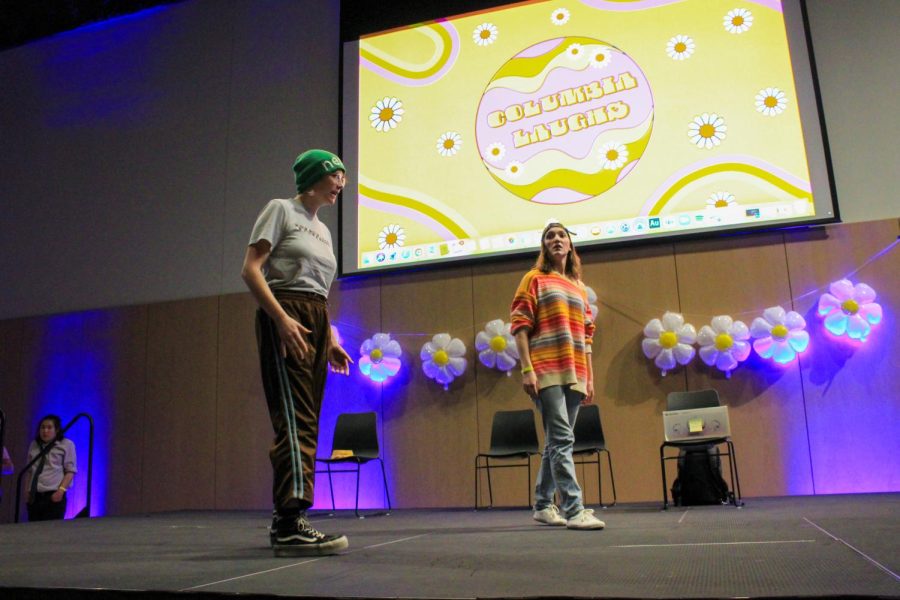
Associate Professor Anne Libera tells her comedy students at Columbia that the role of the “king’s fool” was never just to make people laugh. It was to speak truth to power.
That lesson felt especially urgent for Libera after Disney-owned ABC suspended host Jimmy Kimmel’s late-night show indefinitely last week for “ill-timed” and “insensitive” comments he made about the killing of Charlie Kirk, according to a statement made by Disney.
After facing enormous backlash, ABC reversed the suspension on Monday, Sept. 22 and said Jimmy Kimmel Live! will return on Tuesday, Sept. 23.
For Libera, who teaches in the School of Theatre and Dance, the moment underscored how satirists use humor to question authority and challenge boundaries.
“It says something about our current politics that they are looking to get rid of our modern day ‘fools’,” said Libera, who teaches “Comedy Survey 1” on Friday mornings this seemster.
Although the show is being brought back from suspension, comedy students and faculty told the Chronicle that it should not have happened in the first place.
Sophomore comedy major Kathryn Carman said that the cancellation of the late-night show was discussed in multiple classes.
“There’s a lot going on with comedy right now that’s very important to be aware of,” she said.
Kimmel was the second high-profile late-night host to see his show pulled by a network after Stephen Colbert. Colbert’s “The Late Show” was canceled by CBS just two weeks after the network paid President Donald Trump a large settlement to resolve a defamation lawsuit.
“I think that maybe the way that comedy is being put out will change, but late-night show style jokes about the news, I don’t think you can get rid of that,” Carman said.
After Kimmel was suspended, President Donald Trump said TV broadcasters should lose their licenses for negative coverage of him.
The remarks drew swift criticism from free-speech advocates and politicians already angry over the suspension, including Illinois Gov. JB Pritzker, who told MSNBC that the administration is “using the power of the government to intimidate companies to fire people.”
Assistant Professor Grace Overbeke said when the Trump administration censors comedians for saying something subversive, it is an attempt to label all comedy as “toothless and foolish.”
“Even in a fascist landscape, subversive comedy will continue. It may move from network television to underground cabarets or TikTok, but it will persist,” said Overbeke, who teaches “Comedy: Survey” on Monday and Wednesday mornings this semester.
Sophomore comedy writing and performance major Emily Donmoyer learned about relief theory in Overbeke’s class, a concept directly related to late-night show comedy.
“Relief theory is joking about taboo subjects in order to release tension. I think it’s really good to bring up topics that are controversial,” she said. “No matter how public it is or how people try to oppress it, people will keep on joking and it’s never going to stop.”
Copy edited by Manuel Nocera