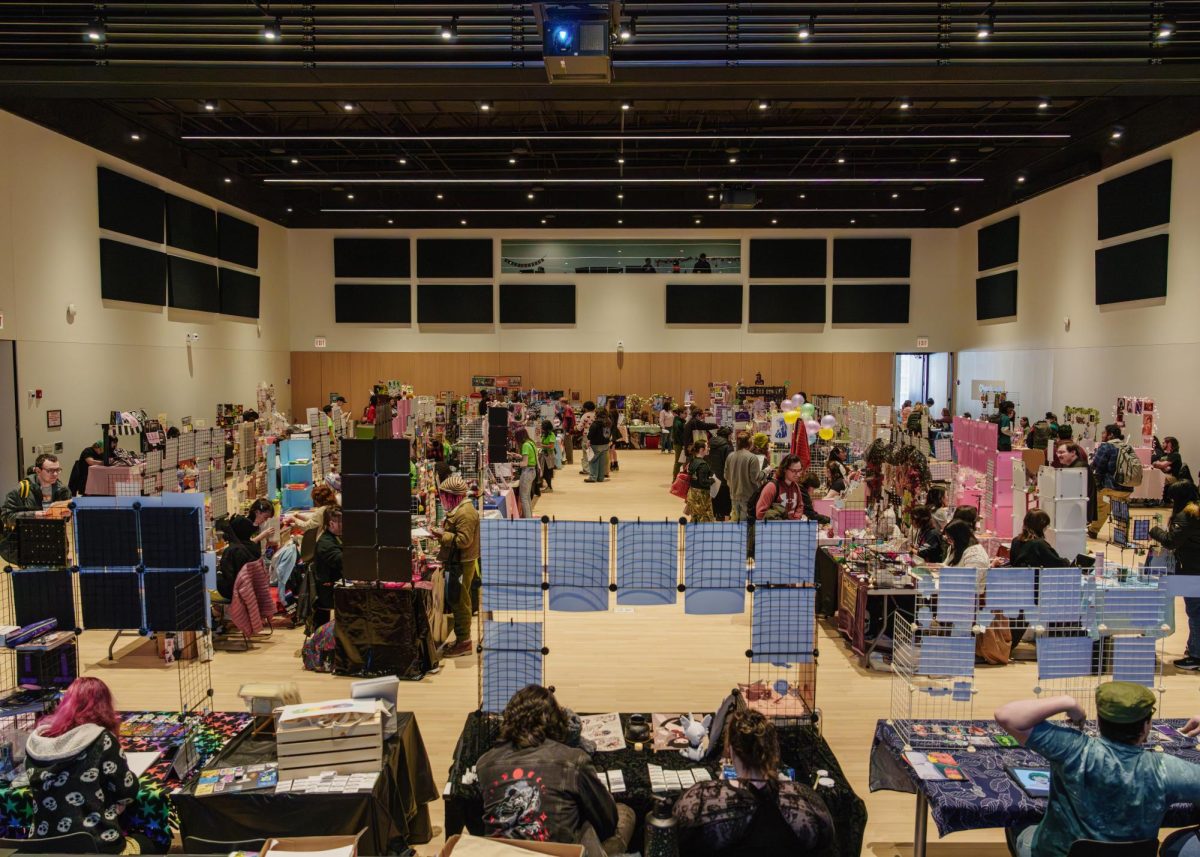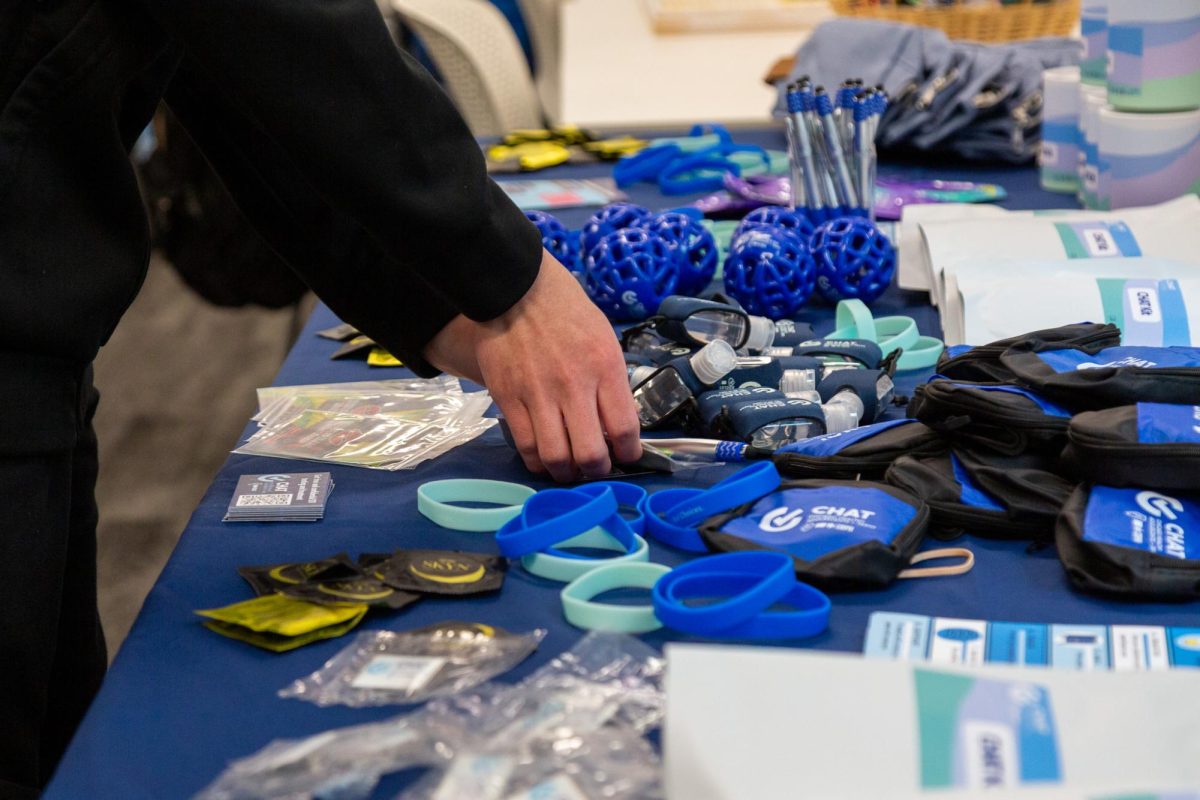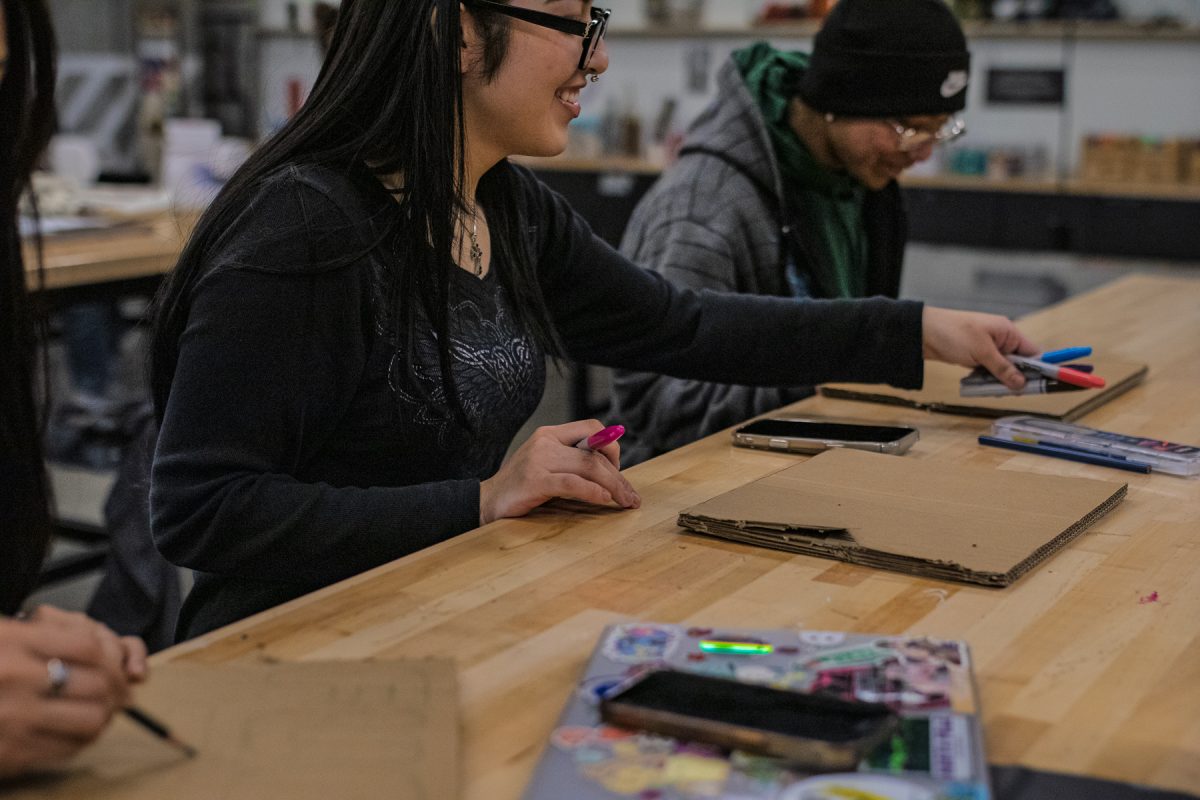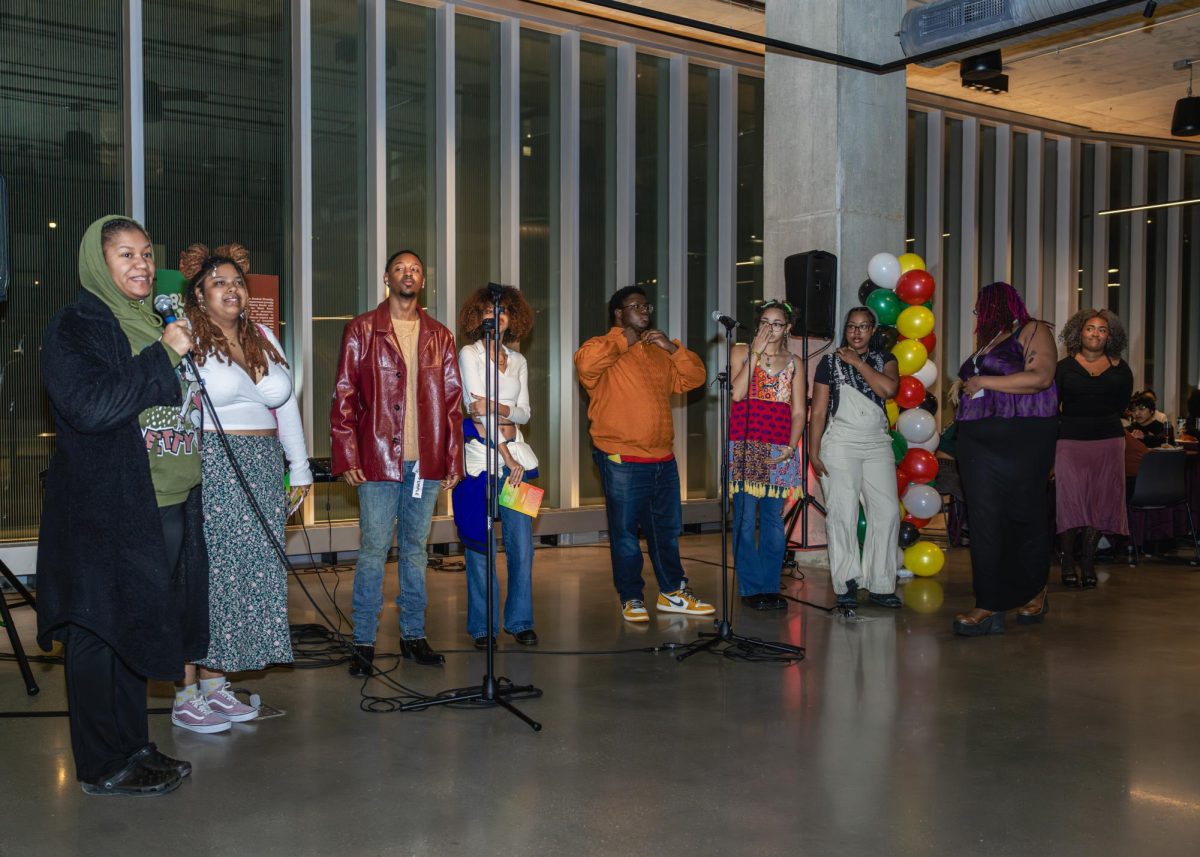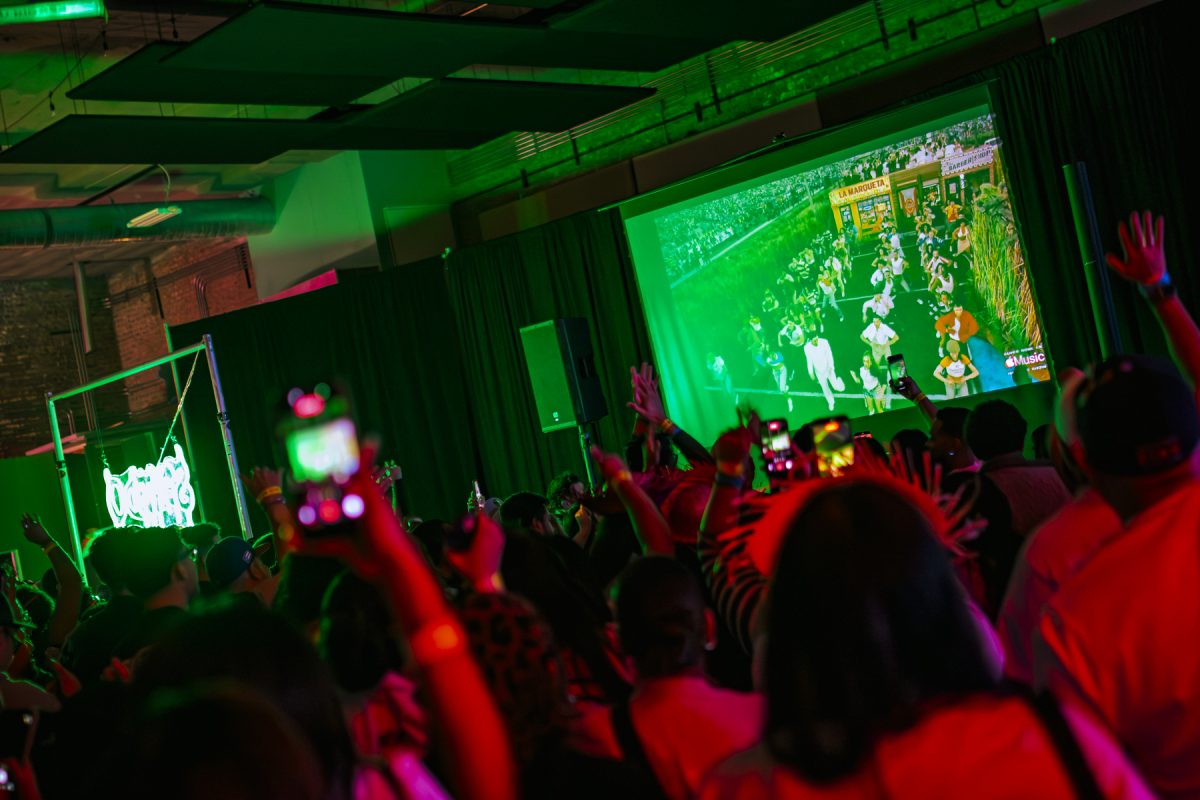

With more than half of Columbia’s 4,461 students identifying as the first in their families to pursue a four-year degree, the college marked National First-Generation Day with music, student art and a renewed focus on how to help those students stay on track to graduate.
At a First-Gen Day Celebration on Wednesday, Nov. 5, college leaders spotlighted new efforts to raise retention and graduation rates for first-generation students, who nationally make up about one-third of the college population but are less likely to complete a degree.
At Columbia, 54% of students identify as first-generation. The percentage is even higher for this year’s incoming class, in which 62% of students identify as first-generation.
“It is critically important that we design our services around those folks who are first gen,” said Emmanuel Lalande, senior vice president of enrollment strategy and student success.
First-year students at the college have a 48% graduation rate and a 66% first-year retention rate. The college is trying to do more to help those students stay and succeed by expanding advising and mentorship programs and building on existing support systems such as tutoring and peer mentoring.
Danielle Alexander, assistant director of Columbia’s Office of Student Persistence, said the event at the Student Center was a chance to recognize those efforts and the people they serve.
“I hope that first-gen individuals feel celebrated, whether they are students, faculty or staff,” Alexander said. “I hope they feel seen, welcomed and supported.”
Eliab Leon, a first-year game development student, had his work on display at the event. He said he felt supported by the event as not only a first-gen student but also as an artist.
“It feels like I’m actually an artist now. Like how artists get to publish their work and people see it. That’s how it feels,” Leon said.
One main issue Leon faced during his first year at the college was blocking out his schedule.
“I may have overbooked myself in the schedule. I did not know work and school could be hassling, but I guess it’s that experience I had to deal with as a first-generation student,” he said.
Leon also appreciated coming to Columbia along with the new enrollment system.
“I kind of feel lucky because I said they’re making it work better for the students and to graduate with the stuff that you need,” he said.
Tyren Sims, a first-year music production major, said he felt pressured to succeed.
“It feels like I’ve got the whole world on my shoulders. Like I’m supposed to do this big thing. It feels like a superhero trying to save the world,” he said.
The large turnout at the celebration surprised Sims.
“It’s just a big room full of people that you can relate to and people that understand what you’re going through because they’ve been in the same position as you,” Sims said. “Some can even help you if you speak up.”
Jordan Lee, a sophomore fictional creative writing major, found community in Columbia’s writing club, where he is able to receive feedback on his pieces from his peers. Lee had three pieces of writing on display at the event.
“I like sharing my work with people because you can motivate them to do something for themselves in a way, “ he said.
Lee said that being a first-generation student can feel like a disadvantage, but it also motivates him to do more.
“I’m the first. I’m doing something to pave the way,” Lee said.
Lalande told the Chronicle that being first-generation is something that continues to impact him.
“Because of me going to college, my brother went to college. Because I went to college, my kids are going to college,” he said.
Copy edited by Vanessa Orozco