Jazlyn Fragoso, a sophomore audio arts major, has long lived with food insecurity. Even with some family support, she has sometimes skipped meals to keep up with tuition.
“I used my whole check just to pay for my balance at school,” Fragarso said.
When those gaps became too large, she turned to ColumbiaCares for support.
Established in 2012, ColumbiaCares is an emergency fund program that provides support for students facing sudden and unexpected challenges. The program provides care packages through a food pantry at 623 S. Wabash, along with clothing through The Rack, a free on-campus thrift store at 916 S. Wabash.
“When you have to worry about adverse situations, it hinders your class experience because you’re focused on those things instead of class,” said Michael Kowalkowski, a junior fine arts major and the vice president of finance for Student Government Association. “I think end of the day ColumbiaCares is there for any student that needs it — no questions asked,” he said.
When Fragroso used the program’s food pantry, she described the staff at ColumbiaCares as caring and helpful, taking the time to explain the pantry to her.
“It’s here for the students if it’s needed, and it’s not something to be ashamed of,” said Fragroso. “Especially with being in college by yourself as you have your own responsibilities and things to take care of.”
Fragoso’s experience is not isolated. When the Supplemental Nutrition Assistance Program was disrupted during the recent government shutdown, some students lost access to food benefits.
“We had a huge influx of students requesting food,” said Christine Greiner, Columbia’s administrative assistant dean of students who oversees ColumbiaCares. “We were able to provide food for those students, but not at SNAP level.”
To support the program’s food pantry, Greiner organized a campus-wide food drive asking the community to donate easy and non-perishable food such as pasta and canned goods. There are boxes in buildings around campus.
“It was kind of an emergency all-call — it wasn’t planned,” Greiner said. “But this particular drive was phenomenal. We had a lot of support and input from the faculty and staff at Columbia.”
Faculty and staff are also being asked to donate from an online wishlist from Amazon. Items include granola bars, raisins, trail mix, peanut butter and pasta.
“I do know that some employees ordered food to be delivered at their office and then they walked it over to the 623 building,” said Greiner.
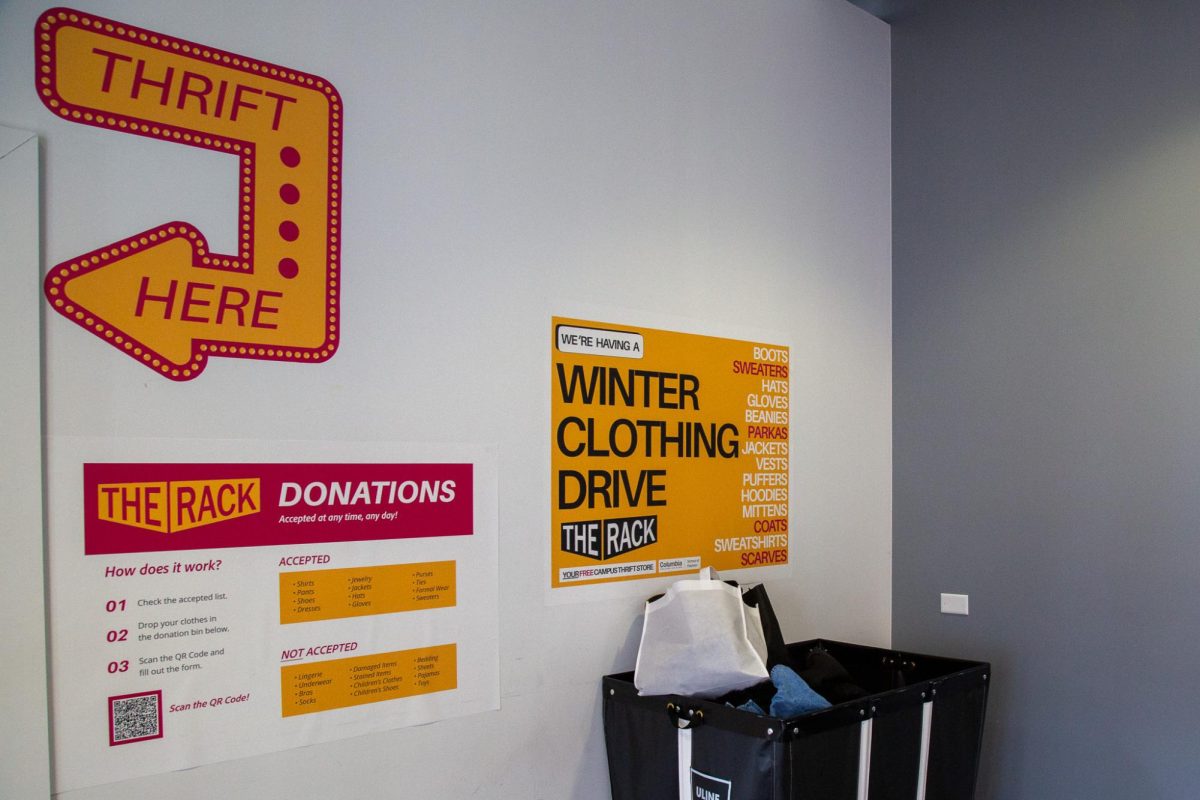
In addition to the food drive, the Student Diversity and Inclusion office also helped organize a winter clothing drive for The Rack in preparation for the upcoming cold season. Students and staff can find donation boxes throughout campus, along with being able to donate winter items directly to The Rack.
“It’s an important resource to have in a city that gets so cold during the winter,” said Amy Hernandez, a student worker at the SDI office and a junior film and television major.
For new students who come from warmer climates, preparing for Chicago’s winter can be both unfamiliar and expensive as they need to invest in coats, boots and additional layers of clothing to stay warm.
“I think it’s a good resource for people to have, and to know that coming to Chicago, they don’t have to break their bank just because it’s their first time needing a big winter coat,” Hernandez said.”
Oshun Cortez, the Student Organization Council representative for Latino Alliance, said he “felt the need to let people be safe in these harsh winters,” and helped coordinate the club’s own donation effort.
In addition to the programs headed by ColumbiaCares, smaller free food pantries can be found at Columbia’s residence halls, along with the Little Food Library at the 624 S. Michigan building.
Copy edited by Vanessa Orozco