A new documentary revisits one of Chicago’s darkest chapters when allegations of police torture were dismissed, two Black men were sent to death row and journalists largely accepted official accounts without scrutiny.
The film “Area 2”, which previewed Wednesday, Jan. 28 on the third floor of 1104 S. Wabash Ave, revisits the Chicago Police Department’s Area 2 torture cases between 1972 and 1991 that scrutinizes how journalists covered — or overlooked — claims of abuse as the cases unfolded.
The screening was a collaboration between the National Association of Black Journalists Chicago Chapter and the Columbia Chronicle.
“I’ve just been fascinated by everyday people who make some form of resistance to authority or criminal authority,” said director James Sorrels. “So the initial motivation was to find out the stories and the motivations of the people who broke the code of silence in this scandal.”
The Area 2 cases are tied to former Chicago police Commander Jon Burge, whose detectives were accused of torturing dozens of Black men into false confessions through beatings, electric shocks and suffocation tactics during the 1970s and 1980s.
Burge was fired in 1993 and later convicted on federal charges of perjury and obstruction of justice, though he was never criminally prosecuted for the torture itself.
In 2015, the city approved a reparations package for survivors that included financial compensation, counseling services, and a formal apology that Chicago has since paid millions of dollars in settlements related to the abuse.
Junior journalism major Tina Krasniqi said she enjoyed the opportunity to see the documentary.
“I think this stuff is important,” she said. “It’s going to be interesting to learn, because I’ve never really attended anything like this and I’m excited to hear about it.”
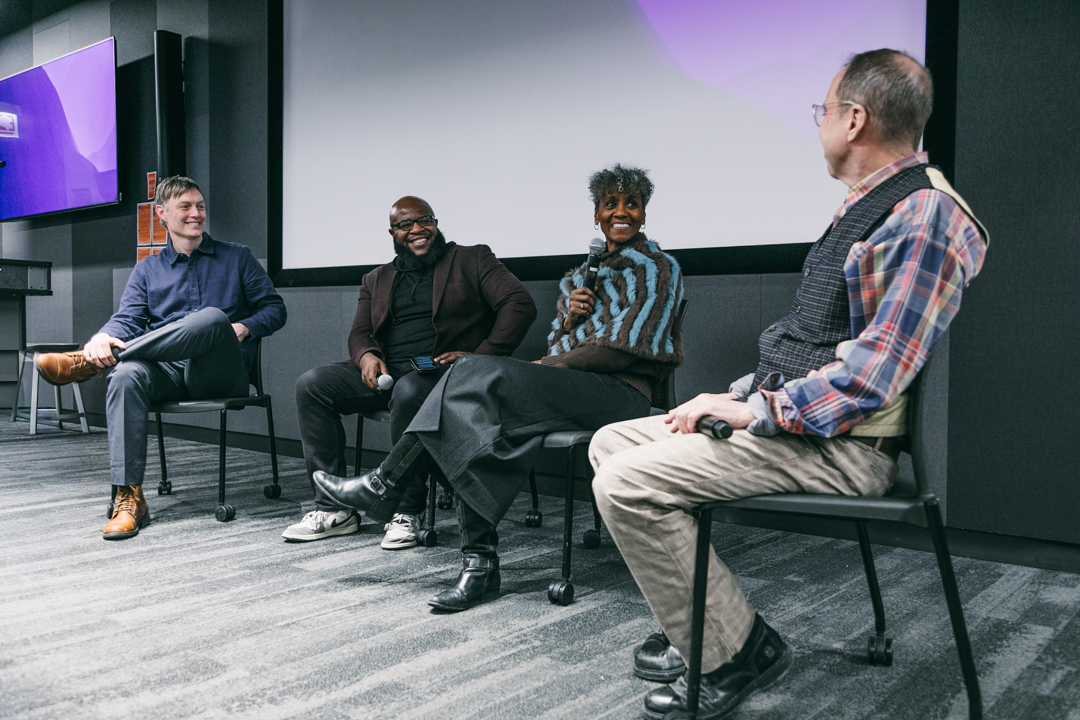
After the viewing, there was a panel discussion with Dorthy Tucker of CBS News and David Jackson of Injustice Watch.
During the panel, Tucker said that TV news only showed the perpetrators and did not dive deeper into who they were and their families during that time.
“We took the police for what they said: they’re the bad guys, they did it. And we didn’t go back and ask those questions because, for one, we didn’t have time,” Tucker said.
She added that there were family members they should have talked to and listened to, but back then, it was common to take the police at their word when they said a suspect was involved.
Similarly, Jackson mentioned that police were put on a pedestal.
”Our society entrusts law enforcement and police with the godlike power of deadly force and doesn’t give that power to any other branch of government,” Jackson said. “And when police or law enforcement breach trust, when they use that power in a way that is not justified, the reaction is angry and visible.”
Victoria Tupper, a sophomore business major, found the documentary to touch on a topic that has since been suppressed.
“This is the kind of stuff that needs to be in the spotlight for people to be held accountable and see how unjustly the system is built,” she said. “Thankfully we have people who support and help raise the voice of others who can’t.”
The panel was moderated by Brandon Pope, part-time instructor in the School of Communication and Culture and president of the Chicago NABJ chapter.
“To be able to get this retelling is really important for those of us who weren’t there,” Pope said. “There’s things even in these forty minutes that I wasn’t quite aware of to that level of detail, so I thought it was really insightful.”
Pope, who teaches “On-camera Media” at Columbia, said the film highlights the power of journalism and storytelling in general.
“There’s impact in our words, there’s impact in our stories and what I’d say to all journalism students, you may think for now it’s run-of-the-mill stuff, but you never know what might be that big story that will not only change hearts and minds, but change laws,” Pope said.
TeKavin Russell, a junior journalism major, said the film highlighted events that often get overlooked.
“This type of short documentary is important because it always gets forgotten about,” Russell said. “This wasn’t a story I was aware of, but people should know.”
Currently, the documentary is in its rough cut phase, with anticipated completion at the end of 2026 or early 2027. Sorrels is currently looking for streaming partners.
Copy edited by Samantha Mosquera