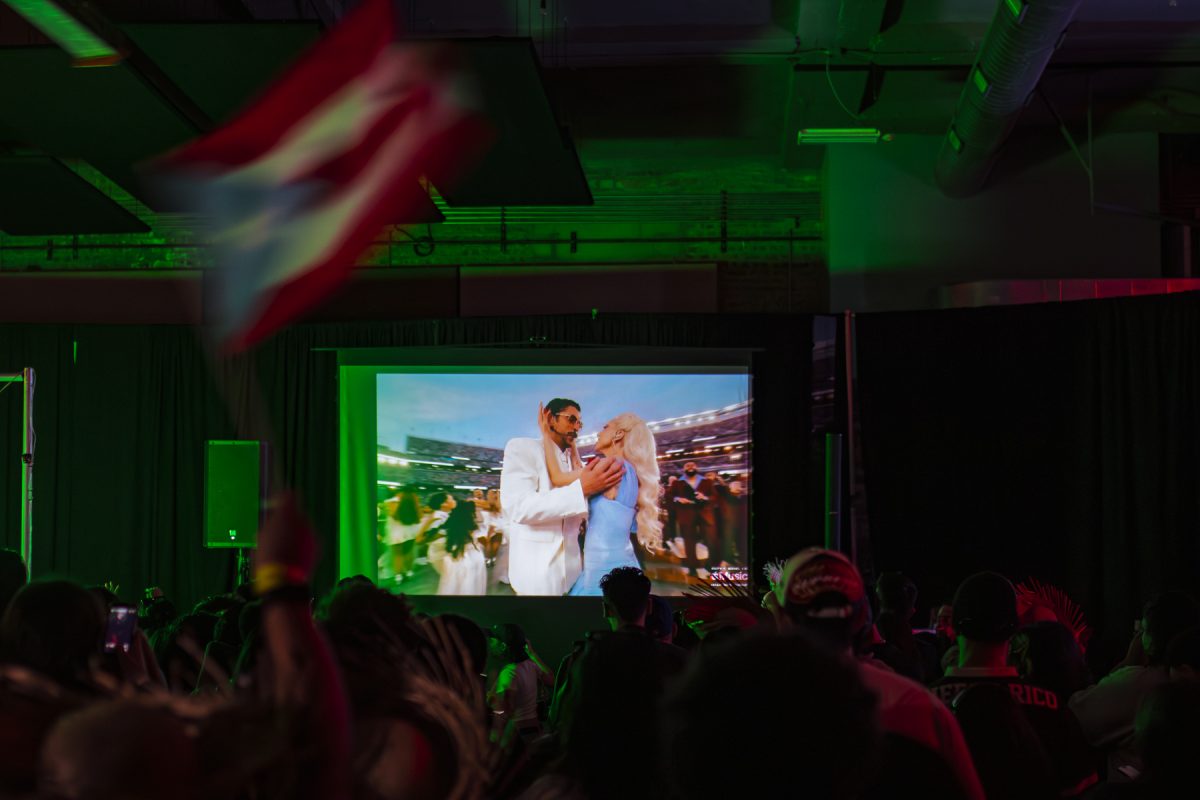
Bad Bunny, also known as Benito Antonio Martínez Ocasio, delivered a halftime show that transformed one of entertainment’s biggest stages into something personal and deeply intentional.
The set design and visuals reflected themes connected to Puerto Rico and the broader Latino experience. Flickering light poles appeared throughout the performance, a visual nod to Puerto Rico’s unstable power system and the daily realities many residents face. Dancers and staging highlighted the Afro-Latino diaspora, celebrating the mix of African, Indigenous and Spanish roots that shape Latin American identity.
Other imagery carried layered meaning. Visual references to sugar cane fields pointed toward Puerto Rico’s agricultural history and the legacy tied to labor and exploitation. The performance kicked off in this setting with “Tití Me Preguntó,” as Bad Bunny, the first artist in history to win the prestigious Album of the Year Grammy award this year with an entirely Spanish-language album, walked past Latin American vendors running taco stands and fresh coconut water stations. Language itself became part of the statement; Bad Bunny performed entirely in Spanish, reinforcing cultural pride and refusing to dilute his voice for a mainstream audience.
More than a concert, the performance blended music, symbolism and surprise appearances into a statement about identity, heritage and pride. The performance ultimately felt less like a solo act and more like a community celebration.
Among the many dancers on stage, Lady Gaga made a surprise appearance with a salsa rendition of her song “Die with a Smile” and was joined by Bad Bunny for a lively musical moment. Ricky Martin brought another generation of Latin pop energy to the show moments later. Around them, celebrities including Cardi B and Pedro Pascal appeared as part of the spectacle, making the event feel less like a solo act and more like a shared cultural moment.
Beyond the star power, the show balanced spectacle with meaning. Bright colors, dancing and humor kept the energy high, but the underlying symbolism invited reflection. Many viewers saw the performance as a love letter to Puerto Rico and Latin culture, blending celebration with subtle commentary about history, identity and resilience. After performing hits such as “VOY A LLeVARTE PA PR” and “El Apagón,” the show ended with a parade of flags representing countries across the Americas. Leading with the Puerto Rico and U.S. flags, Bad Bunny held a football inscribed with the text “Together, We Are America” while ending his set with “DtMF.”
For fans, the show represented a rare moment of cultural visibility on a global stage. Bad Bunny did not simply entertain. He used the spotlight to celebrate his roots, showing that identity, storytelling and music can exist together in a way that feels both powerful and joyful.
No pidió permiso.
Copy edited by Katie Peters