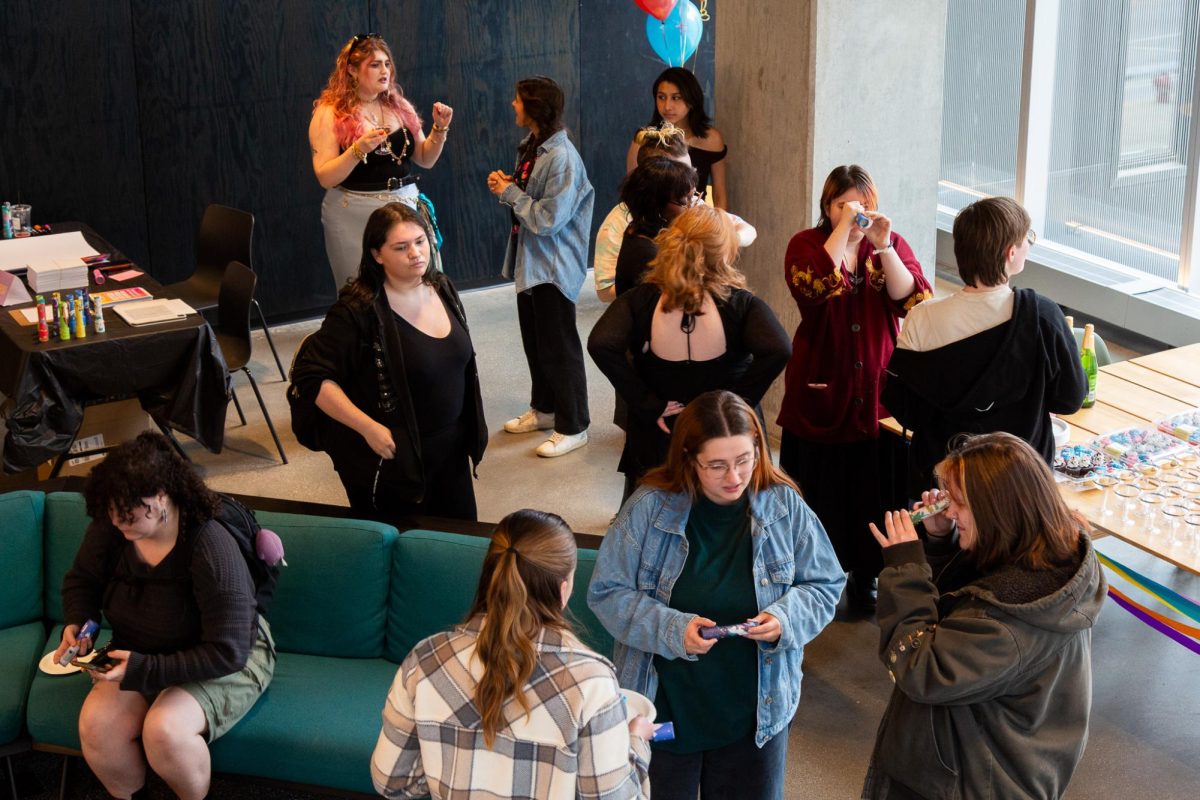

Snow flurries fell across campus as temperatures dropped back below freezing on Friday, Feb. 20, a sharp reminder that winter isn’t finished with Chicago just yet. But, after a brief stretch of 50 and even 60-degree sunshine, some students say even a hint of spring has already shifted their mood and motivation.
“I remember last week, like, as soon as it hit 50 degrees and I walked outside, it was like, ‘Oh, my God.’” says Ash Bushnell, a sophomore illustration major.
Bushnell said the warmer temperatures brought an immediate boost in energy after months of cold weather, something they said often affects their motivation and reasons to go outside.
“When it’s the winter and it’s so cold, you’re like, ‘There’s no point in going outside,’” Bushnell said.
Malik Belyeu, a first-year fashion studies major, said they weren’t as productive last semester. “But now I feel like this is gonna be a better semester,” he said.
A type of depression known as Seasonal Affective Disorder, or seasonal depression, commonly occurs during the fall and winter months due to the reduced sunlight from daylight savings time. Symptoms can include difficulty in concentrating and loss of interests, and affects daily routines such as coursework.
But, even people without SAD can feel the effects of winter in Chicago, which has been consistently colder than average.
“In Chicago where we have really big winters where… you know, we get minimal daylight every day, and it’s cold and it’s dark and people tend to stay inside versus going outside, doing their kind of normal thing,” said Sam Randolph, a clinical intern with the Center of Student Wellbeing.
That sense of isolation resonated with students.
“I would say most people that I talk to, they probably do feel down because they’re inside most of the time, so they can’t do much or they feel like they can’t do much,” said Dashone Jackson, a sophomore entrepreneurship and innovation major.
The way students feel as the seasons change can often carry over into their academic routines, including participation and focus in class.
“At the end of last semester, it was getting to be a slog, and there were points where there were, like, not a lot of people in the classes” said Bushnell.
Randolph said it doesn’t help that Columbia’s urban campus is spread out, sometimes with several blocks between buildings. “These streets, like, they’re like wind tunnels at times.”
That can make it easier to stay in bed rather than attend class, they added.
For students struggling with seasonal mood changes, Randolph suggested small strategies to maintain motivation and wellbeing.
“Being around your people, finding community and finding ways to take care of yourself — like eating regular meals, getting good sleep, drinking enough water — it seems very simple, but those things can set you up for the best possible day, even if like your bandwidth is lower than it would be in other days,” he said.
Columbia College Chicago’s Center for Student Wellbeing also offers short-term counseling, case management, referral support and wellness spaces for students needing emotional support. The college also provides 24/7 virtual mental health care through TimelyCare, an online medical and mental health platform.
Copy edited by Venus Tapang